
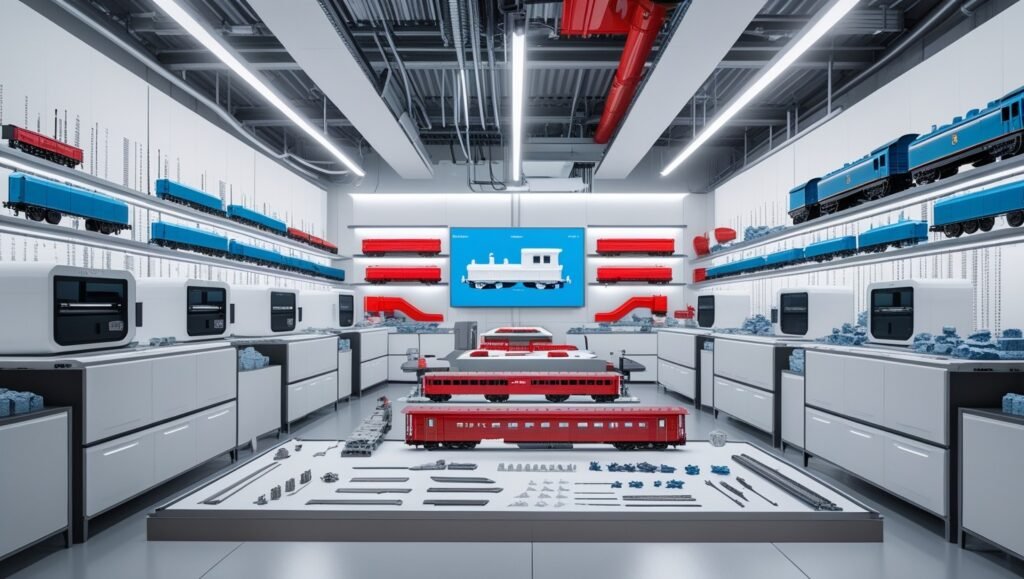
Train model-making has long been a cherished hobby and an important tool across various industries, including architecture, education, film, and urban planning. With the advent of 3D printing technology, this creative field has entered a new and exciting phase. No longer limited by the time-consuming and often restrictive processes of traditional model-making, creators now have the power to bring even the most complex designs to life with speed, accuracy, and customization. 3D printing is revolutionizing train model manufacturing, offering new possibilities for precision and creativity. This shift marks the beginning of a new era in train model making, where digital precision meets artistic vision.
Understanding 3D Printing in Train Model Making
3D printing, also known as additive manufacturing, is a process of creating three-dimensional objects from a digital file. Using materials such as plastic, resin, or even metal, objects are built layer by layer through specialized machines. In the context of train model making, locomotives, coaches, stations, tracks, scenery, and other miniature elements can be accurately reproduced from computer-aided design (CAD) files.
This process opens the door to endless creative possibilities. Whether recreating a heritage steam engine, a local railway station, or a futuristic train, 3D printing allows complete control over every detail and dimension.
Advantages of 3D Printing Over Traditional Model Making
Here are the key reasons why 3D printing has become a game-changer in the field of train model making:
1. Unmatched Customization
With 3D printing, customization is not only possible but also efficient. Traditional model making often involves complex manual work, molds, or pre-made kits that limit creativity. 3D printing allows for bespoke designs tailored exactly to your vision, whether it’s a specific historical train or a unique station layout.
2. Exceptional Detail and Realism
Modern 3D printers can create highly detailed models, capturing fine textures and intricate components that are difficult or time-consuming to make by hand. This enables enthusiasts and professionals to build highly realistic scenes with precise features.
3. Faster Production Time
What used to take weeks or months through manual methods can now be achieved in a matter of days. Once the digital model is prepared, printing and assembling components is a far quicker process, making tight deadlines more manageable.
4. Cost-Effective in the Long Run
Although 3D printing involves an initial setup cost, it significantly reduces labor expenses, material waste, and time consumption. Once a design is created, it can be reused and adjusted for future projects, saving both time and money.
5. Versatile Material Options
3D printing supports a range of materials, including PLA, ABS, and resin, each offering unique qualities such as strength, flexibility, or high surface finish. This versatility allows model makers to choose the best material for each element of the model.
Traditional vs. 3D-Printed Model Making
When comparing traditional model making with 3D printing, the differences are significant. Traditional methods often require weeks or even months of manual work, and customization can be difficult due to the reliance on standard tools and limited material options. In contrast, 3D printing offers much faster turnaround times, often reducing production to a matter of days. It also provides a far higher level of detail and repeatability, which is challenging to achieve consistently by hand. Material waste is significantly lower with 3D printing, as only the exact amount needed is used during production. While traditional methods may involve higher costs due to manual labor and tooling, 3D printing becomes more cost-effective over time, especially when dealing with complex or unique designs. Additionally, once a digital model is created, it can be reused or modified easily for future projects, offering long-term flexibility and scalability.
Applications of 3D Printing in Train Model Making
The use of 3D printing goes far beyond just trains. It can be applied across the entire miniature ecosystem:
Train Engines and Coaches: Accurate replicas of steam, diesel, and electric locomotives, with customizable interiors and exteriors.
Tracks and Switching Systems: Custom track layouts with precise dimensions and operational components.
Station Infrastructure: Scaled models of real or conceptual railway stations.
Urban Landscape and Scenery: Bridges, tunnels, roads, platforms, and terrain elements like trees and rivers.
Miniature Accessories: People, vehicles, benches, signals, signage, and lighting posts to enhance realism.
These elements combine to form visually stunning and functionally rich displays for collectors, museums, commercial presentations, or educational purposes.
Maadhu Train Miniature is the Best Choice for Your Future 3D Printing Train Model
Choosing the right partner for your model-making project is essential. Maadhu Train Miniature is one of India's leading names in professional miniature and 3D printed model making. We specialize in delivering premium-quality train models with high attention to detail and realism.
Why Choose Maadhu Train Miniature?
Extensive experience in 3D design and model making
Highly skilled team of designers and engineers
Cutting-edge 3D printing technology and tools
Custom models for corporate, educational, and private clients
A strong reputation in Mumbai and across India for quality work
We take your ideas and turn them into compelling miniature masterpieces with professionalism and creativity.
We Are Ready to Help Your Project
At Maadhu Train Miniature, we understand the passion behind every project. Whether you are planning a small collectible piece or a large commercial model, we bring the same dedication and craftsmanship to every assignment.
Our team has completed projects for architects, real estate developers, museums, government displays, and movie sets. We are especially known in Mumbai for our high-quality, reliable, and innovative work in 3D printed train model making.
Visit our website to explore our portfolio and see how we can turn your vision into a tangible, detailed reality.
How We Work: Our Simple and Effective Process
Concept and Brief: Share your ideas, references, sketches, or requirements.
3D Modeling: Our designers create precise CAD files based on your input.
Prototype and Review: You receive a virtual model or prototype to approve before production.
Printing and Assembly: The model is printed, assembled, painted, and finished in-house.
Packaging and Delivery: We ensure secure packaging and timely delivery anywhere in India or abroad.
Short FAQs
Q1: How long does it take to complete a 3D printed train model?
Depending on the complexity, it can take anywhere from a few days to a few weeks. The speed of production is usually faster than traditional methods.
Q2: Can I request a custom train or scene to be created?
Yes. We specialize in fully custom 3D printed models based on your preferences, whether it is a specific train, station, or landscape.
Q3: Is 3D printing more expensive than traditional modeling?
In most cases, 3D printing is more cost-effective in the long run, especially for detailed or unique projects. It saves on labor, material waste, and design repetition.
Conclusion
3D printing has revolutionized train model making by offering faster production, better customization, and greater accuracy. Whether you are a hobbyist, a professional, or a business, this technology opens up new opportunities to create stunning, high-quality miniatures.
Maadhu Train Miniature stands at the forefront of this evolution, combining technological expertise with artistic craftsmanship. If you are looking for reliable, creative, and expertly designed 3D-printed train models, we are ready to bring your ideas to life.
Get in touch with Maadhu Train Miniature today and begin your journey into the future of model making.


